KOMO · CNC Routers
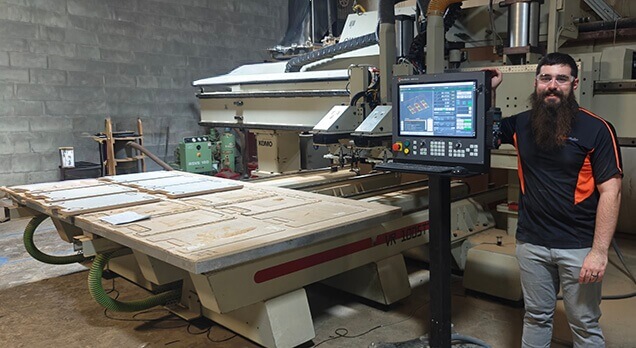
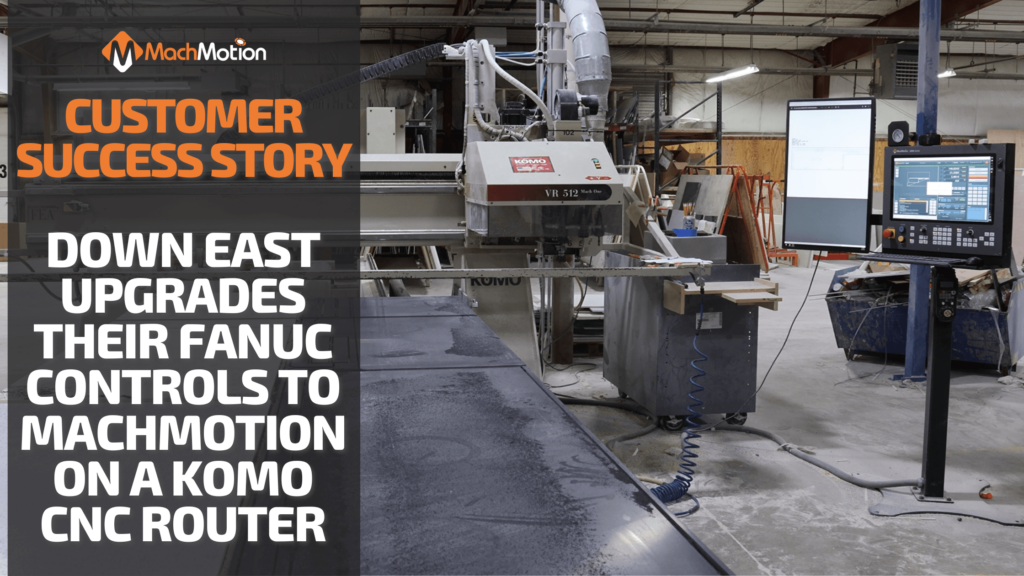
KOMO CNC routers are strong retrofit candidates. Their mechanical structure is robust and well-suited for modern control upgrades. Most KOMO router retrofits complete in 3–5 business days of downtime with a 10–15 year operational life extension.
Typical Downtime
3–5 business days
Retrofit Eligible
Case-by-case
What Gets Replaced
Control system, servo drives, and electrical enclosure
What Stays
All mechanical components: frame, linear guides, and ball screws
KOMO built their CNC routers with heavy-duty mechanical components designed to outlast the control systems that drive them. The frame, spindle, linear guides, and ball screws on a well-maintained KOMO router are typically in serviceable condition long after the original control becomes obsolete, unreliable, or impossible to support.
The failure point is almost always the control, not the machine iron. Replacement parts for older KOMO control systems become unavailable. Software updates stop. The machine that cost $150,000–$300,000 new sits idle because a $15,000 control board can’t be sourced.
A retrofit replaces what failed while keeping what works.
MachMotion technicians arrive on-site with the new control system pre-configured for your specific KOMO model. The process:
Remove the original control system, servo drives, and operator panel. Mount and wire the new control hardware.
Commission the new control & configure axes, tuning, and limits. Transfer and verify your existing programs run.
Run test parts. Verify feeds, speeds, and surface finish match or exceed pre-retrofit performance. Customer sign-off.
Most KOMO router retrofits complete in 3–5 business days. Complex multi-axis configurations may run to 7 days or longer.
What gets replaced:
What stays exactly as-is:
The machine geometry doesn’t change. The accuracy you had before the retrofit is the accuracy you have after typically improves, because modern servo tuning is more precise than the original system.
KOMO router retrofits are typically a fraction of the cost of a replacement depending on machine size, axis count, and configuration complexity. Compare that to $150,000–$400,000 for a new router of equivalent capability.
The retrofit also eliminates the learning curve, training costs, and production disruption of a full machine replacement. Your operators already know the machine. The new control runs standard G-code — similar enough to existing workflows that most shops are running production within a day of completion.
Ready When You Are
Tell us what machines you're running and what's failing. We'll give you a straight answer: retrofit, repair, or replace the machine based on what actually makes sense for your shop.